Gum Disease Treatment Spruce Grove
Protecting the Foundation of Your Smile

A majority of adults across the globe suffer from gum disease. Whether it’s in its early or later stages, when left unaddressed, periodontal disease in Spruce Grove can have a lasting impact on the health and function of your smile. In fact, it’s known to be the number one cause of tooth loss. It’s also been connected to an increased risk of health concerns such as heart attacks, stroke, Alzheimer’s and more. Our top goal is to keep your smile whole as well as boost your overall health by providing personalized gum disease treatment. Call our office today to schedule a consultation or learn more.
Why Choose Spruce Ridge Dental for Gum Disease Treatment?
- We Accept Dental Insurance, CDCP & Alberta Fee Guide
- Precise Diagnoses with Advanced Technology
- Laser Gum Disease Treatment Offered
How Does Gum Disease Develop?
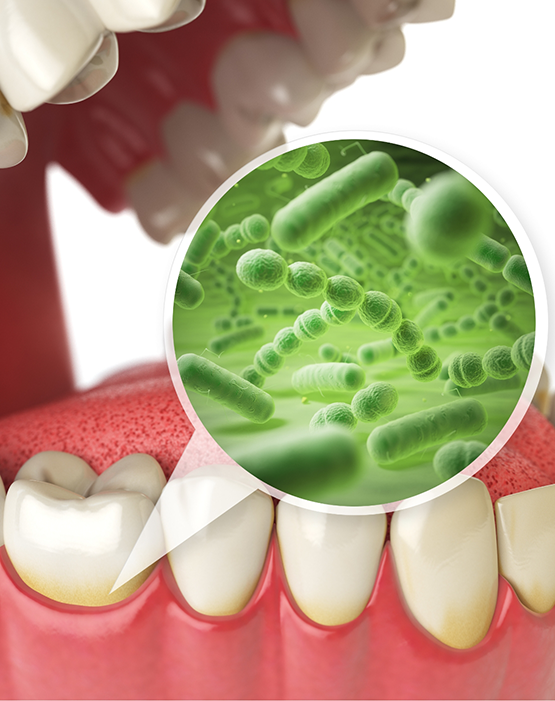
Gum disease is an infection that develops as a result of plaque and tartar accumulation along the gumline and surface of the teeth. This is typically caused by a lack of brushing and flossing, which allows the plaque to harden into tartar. When this happens, you’ll require specialty instruments and techniques to remove it. As the infection is left to progress, it can lead to the deterioration of the hard and soft tissues that anchor the teeth in place, eventually causing tooth loss.
The initial signs of gum disease are usually minor, but the good news is that this stage (called gingivitis) can be reversed with good at-home oral hygiene habits and routine dental cleanings. That’s why our team aims to spot and address bleeding gums, chronic bad breath, and other early signs of gum disease as soon as possible. Once the disease advances to its late stage (called periodontitis), our team can act to manage the symptoms and prevent further harm to your smile with routine periodontal cleanings every three to four months.
How Do I Know If I Have Gum Disease?

The symptoms of gum disease can vary based on the stage that it’s in. Below, we’ve listed some of the most common that we see our patients experience:
- Red and inflamed gums
- Bleeding that occurs when brushing or flossing
- Gum recession that causes small black triangles to appear between teeth
- Chronic bad breath (halitosis)
- Loose permanent teeth
- Tooth loss
- A change in bite
If you are experiencing any of these symptoms, we advise you to schedule a consultation with your dentist in Spruce Grove for further guidance.
Treating Gum Disease

If our team informs you that you’re experiencing symptoms of gingivitis or periodontitis, we’ll discuss our findings with you as well as create a treatment plan. Our recommendations will be based on your unique case and can include either scaling and root planing and/or laser gum disease treatment.
Scaling & Root Planing

Scaling and root planing, better known as a deep cleaning, is a two-step process that aims to minimize bacteria accumulation and ease gum disease symptoms. First, one of our skilled dental hygienists will remove all plaque and tartar build-up from the gumline. Then, they will smooth out the roots of the teeth by removing deposits of hardened bacteria. This will allow the gums to reattach to the teeth to protect the roots. It will then be up to you to maintain good at-home dental hygiene to keep gum disease at bay and allow your smile to heal.
Laser Gum Disease Treatment
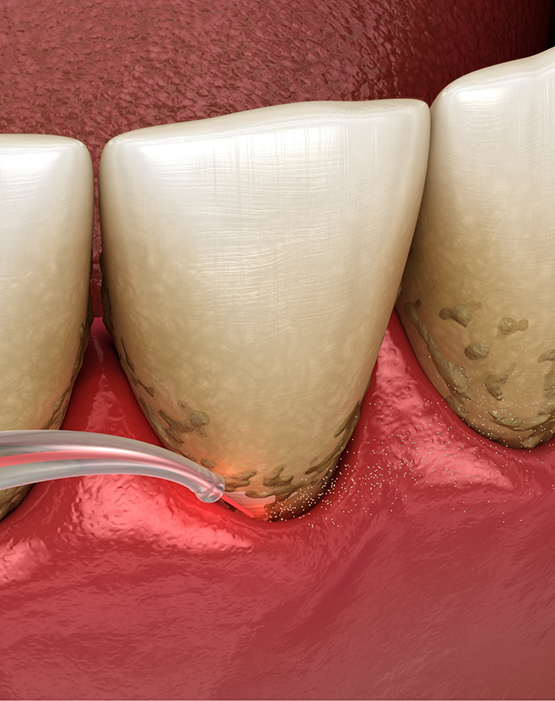
In some cases, we may use our dental laser to assist in gum disease treatment. Using a small, precise beam of light, we can kill harmful oral bacteria on-the-spot and vaporize severely damaged gum tissue, only leaving the healthy tissue behind. Utilizing advanced technology like a dental laser can make your experience more comfortable. It also cauterizes the area to reduce recovery time and post-operative bleeding.